


How to Receive a Hard Pass in Hockey Without Letting It Bounce Away
A teammate sends a firm pass straight to your stick. The puck arrives, hits the blade and skips away before you can make the next play. The pass reached you, but your team still lost the opportunity.
Receiving is a skill worth practicing on its own. For developing hockey players, the aim is more useful than simply stopping the puck: control the first touch so you can skate, pass or shoot next. A clear target, a controlled cushion and practice at a manageable pace give that first touch a purpose.
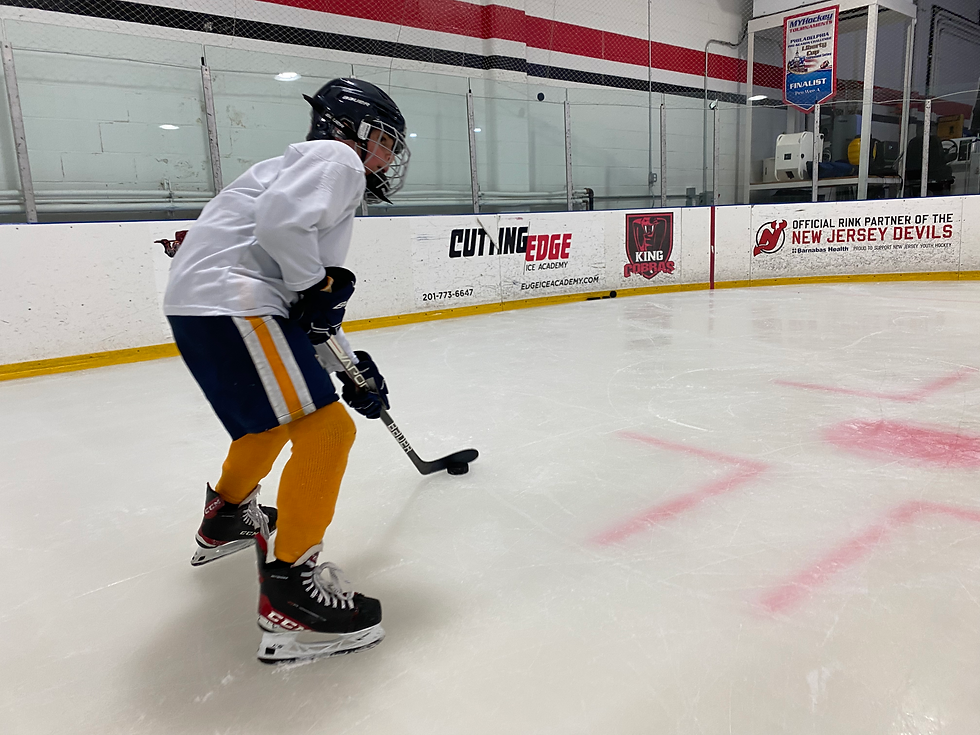
What Does It Mean to Cushion a Hockey Pass?
Cushioning means allowing a small amount of controlled give as the puck meets the stick. You receive its momentum rather than making the blade a rigid wall. The puck should settle close enough to play again, without requiring a long reach or a rescue stickhandle.
That does not mean allowing the stick to become floppy. Think of a controlled catch: enough support to guide the puck, with enough movement to soften the contact.
1. Give the Passer a Target Before the Puck Arrives
Prepare the blade early and keep it on the ice for a flat pass. Face the receiving surface toward the approaching puck instead of offering only the narrow end of the blade. Hockey Canada's coaching guidance pairs that target with watching the puck into the reception and being ready for the next pass.
For a simple partner exercise, pause before each pass. The receiver shows a target, the passer acknowledges it, and then the puck travels. If the receiver is still moving the stick into position after the pass has started, slow the exercise down.
2. Use a Short Catch Instead of a Big Arm Pull
A hard pass can tempt a player to tighten everything and brace for impact. USA Hockey's skills guidance instead emphasizes reducing bottom-hand tension and using the hands and wrists to cushion the puck over a short distance. The blade does not need a large backward sweep.
Try the cue “catch, then play.” Avoid pulling the stick so far behind you that the next action becomes awkward. If the puck rebounds immediately, review the receiving surface and tension. If it disappears behind your feet, review how far the catch is traveling.
3. Judge the First Touch by What Comes Next
During practice, a puck that stops somewhere near the player is not automatically a useful reception. Give the receiver a second job: make a return pass, carry through an open lane, or move the puck to a marked target.
For example, set two cones a few strides beyond the receiver. After controlling the pass, the player skates through the gate with the puck. If every repetition begins with a scramble to retrieve it, reduce the pass pace and improve the first touch before adding more speed.
This keeps the exercise focused on usable possession. The question becomes “Could I make the next play?” rather than “Did the puck touch my stick?”
4. Give the Backhand Its Own Practice Time
Do not treat the backhand as an occasional emergency. Hockey Canada's receiving instructions also call for an available blade, attention to the puck and relaxed wrists when cushioning a backhand pass. Start with a pace the player can handle and practice both sides deliberately.
A useful session note might be: forehand receptions stayed playable, while backhand receptions needed an extra recovery touch. That gives the next practice a specific focus without reducing the whole session to a good-or-bad judgment.
A Simple Progression for Receiving Firmer Passes
The following is a suggested practice progression. A coach can adjust spacing and pace to the player's ability. Increase one challenge at a time rather than demanding maximum pass speed immediately.
Stage 1: Stationary Catch and Return
Partners begin at a comfortable distance with flat, controlled passes. The receiver settles the puck and sends it back. Run a short set on the forehand, then a separate set on the backhand. Between sets, choose just one correction, such as showing the target earlier.
Stage 2: Change the Pass Pace
The passer alternates a comfortable delivery with a slightly firmer one. The receiver works on making both receptions usable. Count how many catches allow an immediate controlled return, then compare another short set at the same difficulty. This is a practice measure, not a universal standard for an age group.
Stage 3: Add Movement and an Exit
The receiver glides through a small receiving area, controls the pass and carries toward a cone gate. Begin without an opponent. Once that is comfortable, a coach can add a simple choice between two exits. Keep the emphasis on the first touch instead of turning the exercise into a race.
Off the ice, a partner passing exercise with an appropriate ball can provide another way to rehearse the hand action in a clear practice space. USA Hockey's 10U/12U dryland guidance includes presenting the blade and cushioning a ball with a short hands-and-wrists catch. Ball behavior differs from a puck on ice, so return to on-ice repetitions too.
Common Problems to Check
The puck misses underneath: check whether the blade was actually on the ice before arrival.
The puck rebounds away: check the blade's receiving angle and whether the hands stayed rigid.
The puck is caught but cannot be played: check whether the reception traveled too far behind the player.
Every firmer pass becomes a struggle: reduce the pace and rebuild a successful repetition before progressing.
Only one side improves: separate forehand and backhand sets so both receive focused attention.
Frequently Asked Questions
Should every practice pass be as hard as possible?
No. Choose a pace that lets the player work on the intended skill, then increase the challenge. A passer's job in an exercise is to help create useful repetitions. A game also calls for an appropriate delivery, rather than maximum force on every pass.
How can a player tell whether receiving is improving?
Use the same exercise and watch whether more first touches lead directly into the next task. Keep a brief note about the side, pace and movement involved. That is more informative than comparing a stationary beginner repetition with a moving, pressured one.
Working on Puck Skills in Elmwood Park, NJ
If receiving passes is a specific development goal, individual feedback can help identify what to work on next. Cutting Edge Ice Academy offers private hockey lessons in Elmwood Park, New Jersey, focused around a player's game. Bring a clear question, such as why a firmer backhand pass keeps escaping, rather than asking only for more difficult drills.
A dependable first touch does not need to look dramatic. Give the passer a target, make a controlled catch and leave yourself a useful next play. Practice those details before asking the puck to arrive faster.


