


Why Competition Is Essential for Skill Development
- Mar 9
- 3 min read
In player development, practice structure, coaching quality, and repetition are all important. But one ingredient often separates average development from
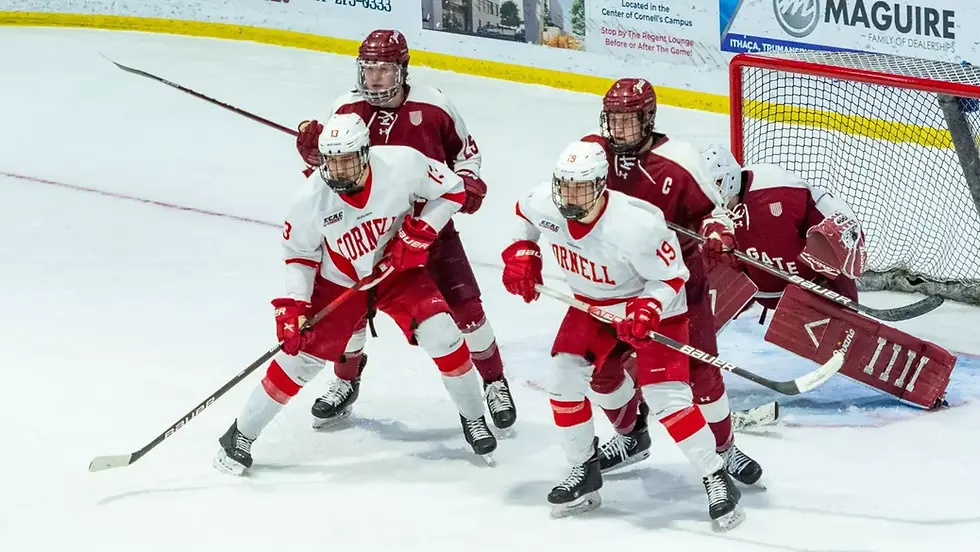
elite development: competition. When players are placed in environments where they must compete for space, time, and puck possession, skill development accelerates dramatically.
Competition transforms practice from simple repetition into meaningful learning.
Competition Creates Game-Like Pressure
Hockey is played in tight spaces with very little time to think. A player rarely receives the puck without immediate pressure from an opponent. Because of this, practicing skills in isolation only goes so far.
Competition introduces the same challenges players face in games:
Defenders closing quickly
Limited time to make decisions
Physical and positional pressure
Unpredictable puck movement
When players must execute skills while competing, their brain learns how to process information faster and make better decisions under pressure.
A player who can stickhandle through cones may look skilled, but the real test is whether they can protect the puck against a defender who is actively trying to take it away.
Competition Forces Adaptation
One of the most powerful aspects of competition is that it forces players to adapt.
In non-competitive drills, players often repeat the same movement patterns over and over. But in competitive situations, the environment constantly changes:
Opponents react differently
Passing lanes open and close
Space appears and disappears
Timing changes
Because of this variability, players must constantly adjust their technique, timing, and decisions. This adaptation is where real learning happens.
The best players are not just technically skilled—they are adaptable problem
solvers.
Competition Raises Intensity
Players naturally elevate their effort level when competition is involved.
Turn a simple drill into a race, small-area game, or battle, and suddenly players:
Skate harder
Protect the puck more aggressively
Fight for position
React faster
This increased intensity closely mirrors the demands of actual games.
Development improves when practices match the speed, pressure, and
physicality of competition.
Without competition, many practices unintentionally drift toward a pace that is far slower than real hockey.
Competition Develops Resilience
Skill development is not just physical—it is mental.
Competitive environments teach players how to handle:
Losing puck battles
Making mistakes
Facing strong opponents
Competing through fatigue
Players who regularly compete in practice become more comfortable with adversity. Instead of avoiding mistakes, they learn to adjust and respond immediately.
This resilience is critical in hockey, where games often swing on a single shift or moment.
Competition Makes Skills Functional
The ultimate goal of skill development is not simply to perform skills—it is to perform them when it matters.
Competition bridges the gap between practice skills and game performance. It ensures that:
Stickhandling works against pressure
Passing works through traffic
Shooting works with defenders closing
Skating works while battling for space
In other words, competition turns skills into functional tools that work in real games.
Building Competitive Training Environments
For coaches, the goal should not be to eliminate structure, but to layer competition into skill development. This can include:
Small-area games
1-on-1 and 2-on-2 battles
Puck protection contests
Scoring challenges
Timed or point-based drills
These environments encourage players to practice skills while solving problems against opponents.
Final Thoughts
Great players are not just skilled—they are skilled competitors.
Competition pushes players to execute faster, think quicker, adapt to pressure, and battle through adversity. When practices include meaningful competitive environments, skill development becomes deeper, faster, and far more transferable to games.
Because in hockey, the goal isn’t just to perform a skill.
The goal is to win the moment when someone is trying to stop you. 🏒


