


Why Sleep Is One of the Most Important Parts of Youth Hockey Development
When parents and young hockey players think about improving performance, they usually focus on skating lessons, stickhandling drills, strength training, conditioning, and additional ice time. While all of these are valuable parts of player development, one of the most important factors in athletic improvement happens away from the rink: sleep.
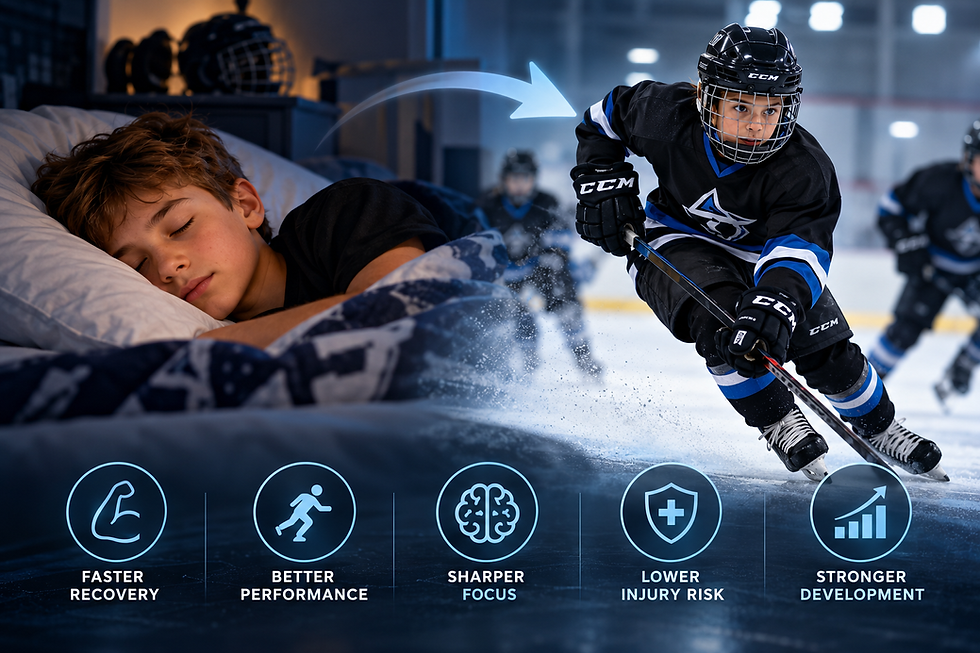
For youth hockey players, sleep is not simply a break from training. It is an essential part of the recovery process that allows the body and brain to adapt to the physical and mental demands of the sport.
Hockey requires explosive skating, quick decision-making, coordination, physical strength, and consistent concentration. Without adequate sleep, young athletes may struggle to perform these skills at their best, even when they are putting in the necessary work during practices and games.
The bottom line: Quality sleep supports better recovery, improved focus, physical development, and more consistent on-ice performance.
How Does Sleep Affect Hockey Performance?
Sleep supports several important functions that directly influence how a hockey player performs on the ice.
1. Muscle Recovery and Physical Development
Hockey places significant demands on the body's muscles and joints.
Every skating stride, explosive acceleration, battle along the boards, and change of direction requires physical effort. During intense practices and games, muscles experience fatigue and small amounts of exercise-related tissue stress.
Sleep provides an important opportunity for the body to recover and adapt.
During sleep, the body supports processes associated with:
Muscle tissue repair and recovery
Regulation of hormones involved in growth and development
Restoration of normal physical function following exercise
Immune system health
Adaptation to the demands of training
For growing hockey players, these recovery processes are especially important.
Why it matters for hockey: A player who consistently gets sufficient sleep is better positioned to recover between demanding skating sessions, strength workouts, practices, and weekend tournaments.
Additional training can be beneficial, but players need adequate recovery to get the most out of that work.
2. Faster Reaction Time and Better Decision-Making
Hockey is one of the fastest team sports, requiring players to constantly process information and react to changing situations.
Consider how many decisions a player makes during a single shift:
Should I pass, shoot, or carry the puck?
Is a defender closing the gap?
Where is the open ice?
Is my teammate moving into a scoring position?
Should I pressure the puck carrier or protect the middle of the ice?
These decisions frequently occur in fractions of a second.
Insufficient sleep can negatively affect attention, reaction time, and cognitive performance.
A tired hockey player may recognize an opportunity later, react more slowly to pressure, or struggle to maintain concentration throughout a game.
Why it matters for hockey: Strong hockey IQ depends on more than understanding the game. Players must also be mentally alert enough to recognize situations and execute decisions quickly.
A well-rested player is better prepared to process the game at speed.
3. Improved Skating Coordination and Body Control
Effective skating requires a combination of strength, balance, coordination, and precise movement.
Players must control their edges while accelerating, transitioning, stopping, turning, and changing direction.
When athletes are excessively fatigued, their ability to consistently execute complex movements may suffer.
For hockey players, this can affect:
Edge control and balance
Skating transitions
Timing during puckhandling
Coordination when receiving passes
Body positioning during physical battles
Overall movement efficiency
Players spend countless hours developing their skating mechanics. Adequate sleep helps support the attention and physical readiness necessary to perform those skills consistently.
Why it matters for hockey: A technically sound skating stride is most effective when the athlete is physically recovered and mentally focused enough to execute it properly.
4. Learning New Skills and Retaining Coaching Information
One of the most overlooked benefits of sleep is its relationship with learning and memory.
Developing hockey skills involves more than repeating movements. Players must learn techniques, recognize patterns, understand tactical concepts, and apply coaching feedback.
Sleep supports memory consolidation, the process through which the brain strengthens and organizes information learned during the day.
For example, a player might spend an evening practice working on:
Proper outside-edge mechanics
New puck protection techniques
Defensive-zone responsibilities
Power-play positioning
Reading pressure during small-area games
Getting adequate sleep afterward supports the learning process that helps players retain and apply new information.
Why it matters for hockey: Player development is not determined solely by the number of repetitions completed. It also depends on how effectively athletes learn, retain, and execute those skills.
Can Lack of Sleep Increase Injury Risk in Youth Hockey?
Yes. Insufficient sleep is associated with an increased risk of injuries in children and adolescents.
According to the Centers for Disease Control and Prevention (CDC), children and teenagers who do not get enough sleep have a higher risk of injuries, along with attention and behavioral difficulties.
In hockey, a lack of sleep may contribute to several concerns:
Reduced awareness: Tired players may be slower to recognize approaching opponents or developing collisions.
Poor concentration: Difficulty maintaining attention can lead to mistakes in positioning or execution.
Decreased coordination: Fatigue may interfere with balance and movement control.
Inadequate recovery: Repeatedly training hard without sufficient rest can contribute to accumulated physical fatigue.
Sleep alone cannot prevent injuries, and hockey always involves some level of physical risk. However, proper rest is an important component of responsible athletic preparation.
For coaches and parents, recognizing signs of excessive fatigue should be just as important as identifying areas for improvement in skating or puck skills.
How Much Sleep Do Youth Hockey Players Need?
Sleep requirements depend primarily on an athlete's age, although individual needs can vary.
According to recommendations from the American Academy of Sleep Medicine, also shared by the CDC:
Age Group | Recommended Sleep |
Children ages 6–12 | 9–12 hours per 24 hours |
Teenagers ages 13–18 | 8–10 hours per 24 hours |
These recommendations apply to children and teenagers generally, including young athletes.
Players participating in demanding hockey schedules should pay close attention to sleep quality, consistent sleep routines, and signs that they are not adequately recovering.
For example, a 12-year-old hockey player who needs to wake up at 6:30 AM for school should have a bedtime routine that allows enough time to fall asleep and achieve the recommended amount of rest.
Families should remember that time spent in bed does not always equal time spent sleeping.
Why Sleep Matters During Hockey Tournament Weekends
Tournament weekends can present a significant recovery challenge for youth hockey players.
Teams may play multiple games over two or three days, sometimes with early morning starts and limited recovery time between games.
For young athletes, this creates a combination of physical fatigue, mental fatigue, travel demands, and disrupted sleep schedules.
Parents and players should prioritize several recovery habits during tournament weekends.
Maintain a Consistent Bedtime
Even when traveling, try to maintain a sleep schedule that is reasonably close to the player's normal routine.
Late nights at hotels can be entertaining, but regularly sacrificing sleep can make recovery more difficult.
Prioritize Hydration and Nutrition
Sleep is only one component of athletic recovery.
Players should also consume appropriate meals, maintain hydration, and refuel after games to support their physical recovery.
Avoid Unnecessary Physical Exertion
Between games, players should avoid excessive additional activity that leaves them more fatigued.
Light movement can be helpful, but spending hours swimming or running around the hotel may not be the best recovery choice during a demanding tournament.
Give Players Time to Mentally Unwind
Competitive hockey can be emotionally demanding.
After intense games, players may need some time to relax before attempting to fall asleep.
Establishing a calming postgame routine can help young athletes transition from competition to rest.
Tournament takeaway: Recovery should be treated as part of the team's preparation strategy, not something that happens only when the games are finished.
The Connection Between Sleep, Confidence, and Mental Performance
Youth hockey is not only physically demanding. It also requires confidence, emotional control, resilience, and concentration.
A player might have an excellent practice one day and struggle the next, even without any major changes in skill level.
Sleep can be one contributing factor.
Insufficient sleep may negatively affect mood regulation, attention, and the ability to handle stress.
For young hockey players, this can make challenging situations feel more difficult.
Examples include:
Recovering emotionally after a mistake
Staying confident following a difficult shift
Maintaining focus after a bad call
Responding positively to coaching feedback
Remaining composed during close games
Young athletes are still developing emotionally and mentally. Consistent sleep routines support their overall well-being in addition to their athletic performance.
7 Practical Sleep Tips for Youth Hockey Players
Improving sleep habits does not necessarily require major lifestyle changes.
Small, consistent adjustments can help young athletes establish healthier recovery routines.
1. Establish a Regular Sleep Schedule
Try to maintain consistent bedtimes and wake-up times throughout the week, including weekends.
Consistency helps regulate the body's natural sleep-wake cycle.
2. Reduce Screen Time Before Bed
Phones, video games, tablets, and televisions can keep players mentally stimulated when they should be winding down.
Create a screen-free period before bedtime whenever possible.
3. Create a Comfortable Sleeping Environment
A quiet, dark, and comfortably cool bedroom can make it easier to fall asleep and remain asleep.
4. Avoid Caffeine Late in the Day
Caffeinated drinks, including energy drinks, can interfere with sleep.
Young athletes should avoid relying on stimulants to compensate for inadequate rest.
5. Develop a Post-Practice Wind-Down Routine
Evening hockey practices can leave players physically tired but mentally energized.
After returning home, establish a predictable routine that may include showering, eating an appropriate recovery snack, preparing for the next day, and relaxing.
6. Plan Around Early Morning Practices and Games
When players have early morning ice times, families should consider adjusting the previous evening's routine to protect the athlete's sleep opportunity.
Preparing equipment, meals, and clothing in advance can help reduce unnecessary stress.
7. Treat Sleep Like Part of the Training Schedule
Just as hockey players schedule skating lessons, practices, and off-ice workouts, they should also make adequate sleep a priority.
Remember: More training is not always better if the athlete is not recovering properly.
Why Recovery Is an Essential Part of Long-Term Hockey Development
One of the biggest mistakes young athletes can make is assuming that improvement only happens when they are actively training.
In reality, athletic development requires a balance between physical stimulus and recovery.
Quality hockey training challenges the body and brain.
Recovery provides the opportunity to adapt to those challenges.
A player who participates in multiple practices, private lessons, off-ice workouts, and weekend games without adequate recovery may experience persistent fatigue and reduced training quality.
This does not mean young athletes should avoid additional training.
It means that training volume should be appropriate for the athlete's age, physical development, overall schedule, and ability to recover.
At Cutting Edge Ice Academy in Elmwood Park, New Jersey, we emphasize developing hockey players through purposeful skill training, quality repetitions, and improved understanding of the game.
However, maximizing the benefits of training also requires healthy habits away from the rink.
Nutrition, hydration, sleep, and appropriate rest are all important parts of long-term player development.
Frequently Asked Questions About Sleep and Youth Hockey
How many hours of sleep should a youth hockey player get?
Children ages 6–12 should generally get 9–12 hours of sleep per 24 hours, while teenagers ages 13–18 should get 8–10 hours, according to recommendations from the American Academy of Sleep Medicine.
Individual sleep needs can vary.
Does getting more sleep improve hockey performance?
Getting adequate sleep supports reaction time, attention, coordination, memory, and physical recovery, all of which contribute to hockey performance.
However, sleeping beyond a healthy amount does not automatically make an athlete faster or more skilled.
Can a lack of sleep affect hockey IQ?
Yes. Sleep deprivation can negatively influence attention, decision-making, and information processing.
These abilities are important for reading plays, recognizing pressure, and making effective decisions during games.
Should hockey players sleep more after a tournament?
Players may feel a greater need for rest following physically demanding tournament weekends.
Maintaining age-appropriate sleep duration and allowing sufficient recovery time are important. Some players may temporarily need additional sleep as they recover.
Is sleep more important than extra hockey training?
Both are important, but additional training should not routinely come at the expense of sufficient sleep.
A well-structured development plan includes quality training, appropriate recovery, and healthy daily habits.
What should parents do if their hockey player is always tired?
Start by reviewing the player's sleep schedule, training demands, nutrition, and overall daily routine.
If excessive fatigue persists despite adequate rest, parents should consult a healthcare professional to investigate potential underlying causes.
Final Thoughts: Better Hockey Development Starts With Better Recovery
Becoming a better hockey player requires commitment, consistency, and a willingness to improve.
But improvement does not happen exclusively during practices, games, or private lessons.
Sleep plays a critical role in supporting the physical, technical, and mental development of young athletes.
Players who prioritize healthy sleep habits give themselves a better opportunity to recover between training sessions, maintain concentration, learn new skills, and perform consistently throughout the hockey season.
For parents and coaches, the message is simple:
Don't just focus on how much work a player is putting in. Pay attention to how well that player is recovering from the work.
At Cutting Edge Ice Academy in Elmwood Park, NJ, our goal is to help young athletes build the fundamental skills, hockey IQ, and confidence needed for long-term success.
Proper recovery is an important part of that process.
Train with purpose. Recover with intention. Develop for the long term.


