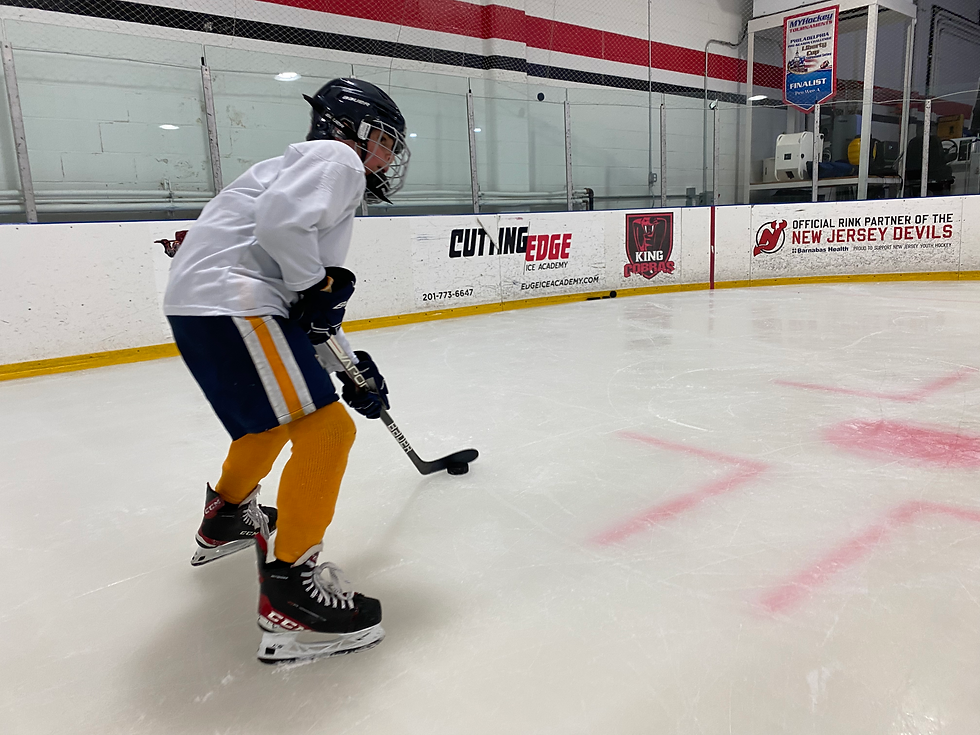
How to Choose One Skill Goal for Hockey Practice
Choose one hockey practice goal by naming a skill, deciding where you will use it and picking something you can check afterward. For example, work on receiving a pass while moving and keeping it within reach for the next play. Share the goal with your coach so it fits the session.
A young player arrives wanting to improve skating, shooting and puck control. All three matter, but the next hour may include only a few chances to work on each. Choosing one detail gives the player something to notice when those chances arrive.

Start With One Moment You Want to Improve
Think of a play that has been difficult recently. Maybe a pass gets away when you start skating, or a turn leaves you chasing the puck. Describe the moment to your coach, who can help identify which part of the movement to work on.
The goal should fit your current ability and the practice ahead. USA Hockey’s goal-setting guidance encourages young athletes to choose realistic, observable actions, write them down and review them as they develop. Read USA Hockey’s goal-setting guide.
Give the Goal a Place in Practice
A goal becomes easier to use when you know which drill will give you a chance to try it. If your focus is receiving a pass in motion, look for that moment in passing drills and small-area games. Ask the coach when you are unsure how it fits.
During a team practice, follow the drill and the coach’s instructions. Your personal focus can sit inside that task. In a passing line, for example, notice whether your first touch leaves the puck ready for the next pass. In a game, notice whether you can collect it while keeping your feet moving.
Choose a Check You Can Remember
Use a short observation or a small count. A player working on the first touch might count how many of five passes stayed close enough to play without chasing. The coach can choose the distance and pace so the task matches the player.
Keep the conditions in mind. Five passes from a stationary partner and five received while turning are different tasks. If the second version is harder, that tells you where control breaks down. Our guide to receiving a hard pass gives examples of the receiving skill itself.
Three Goals to Adapt With Your Coach
For a skating station, choose a controlled finish. You might work on stopping inside an agreed area on the side you find harder. Check whether you finished balanced and ready to move again.
For puck control, choose a finish point for a pull across your body. Notice whether you can settle the puck there before passing. If the puck repeatedly ends beyond that point, bring the distance down with your coach.
For a shooting station, choose a target you can aim at consistently from a coach-selected distance. Record where the attempts went, then ask which detail to change. Keep that same distance for the next comparison.
Take One Observation Into the Next Session
After practice, write one sentence about what happened. “I controlled four passes while gliding, but lost two when I turned” gives you and your coach a starting point. Decide together whether to repeat the task or add a little more movement or pressure.
Parents can ask what the player chose to work on and which attempt felt different. Let the player describe it in their own words. For more on using a coach’s suggestion in the next rep, read our guide to coachability and feedback.
Bring Your Goal to Training in Elmwood Park
Players in Elmwood Park and across North Jersey can bring a specific skill question to Cutting Edge Ice Academy. Review the training options and current schedule to find a session that fits the skill and age group.