


Why Your Top Hand Matters in Stickhandling
Your top hand controls how the stick blade turns during stickhandling. Your lower hand helps guide the shaft and adjust your reach. If every movement feels like pushing a broom across the ice, check what your hands are doing before trying to move the puck faster.
For a young player, that makes hand control a useful practice target: can the player keep the puck close, move it deliberately and finish ready for the next play? A fast drill is less useful when the blade keeps losing contact.
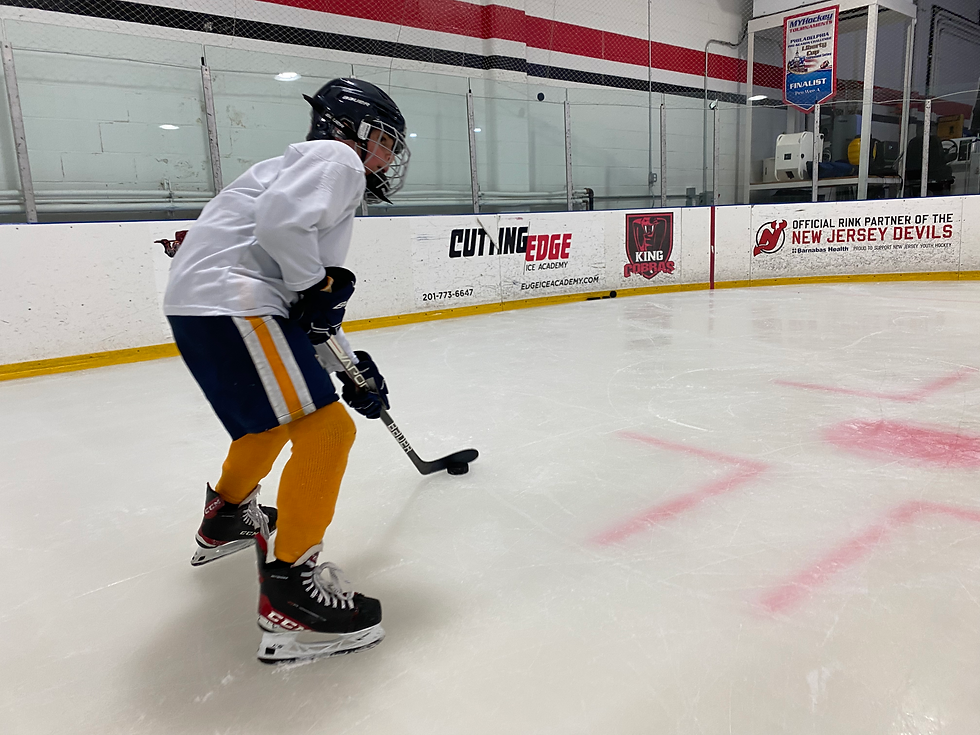
What the Top Hand Actually Does
The hand at the handle end can rotate the shaft, changing the blade’s angle as the puck moves between forehand and backhand. The lower hand supports that movement without locking the shaft in place. That division of work is the central teaching point in USA Hockey’s top-hand-control stickhandling exercise.
Think about a player pulling a puck sideways before making a pass. The useful result is a controlled puck in a playable position. If the puck escapes after the pull, count the attempt as unfinished even if the first movement looked quick.
Start With a Grip That Can Move
Hockey Canada’s introductory coaching guide places the top hand at the end of the stick and teaches relaxed upper-body movement and wrist rotation. It also treats stick fit as part of the setup. If a player cannot move the handle comfortably in front of the body, ask a coach to check the setup.
Before a drill, take a quiet practice position and move the blade slowly. Notice whether the upper glove has room to move or keeps bumping the body. Let a coach look at the whole picture rather than changing stick length based on one photograph or one awkward repetition.
Three Ways to Check Your Hand Control
1. Slow Forehand-to-Backhand Touches
On a clear, suitable practice surface, move a ball or puck gently from side to side. Use a deliberate pace and watch whether the blade turns to receive each touch. USA Hockey’s exercise emphasizes a secure top-hand grip, a lighter lower hand and top-wrist rotation to cup the ball.
Try a short sequence, pause with control and start again. Keep the same small practice area for the next attempt. Your comparison is simple: did the puck stay in that area, or did each touch send it a little farther away?
2. Small Touch, Wider Pull, Controlled Finish
Make two small touches, pull the puck farther to one side and bring it back to a clear stopping point. Start with a distance you can manage. The lower hand can adjust along the shaft instead of staying fixed in one position; this is another focus of USA Hockey’s drill.
Add a finish that makes the repetition meaningful: settle the puck beside a floor marker, then reset. If the wider pull repeatedly ends beyond the marker, shorten it. Progress when you can finish where you intended, rather than when the movement looks impressive.
3. Carry the Skill Into Skating
On ice, use a familiar, uncrowded practice lane under a coach’s direction. Try the same controlled touch while gliding, then make an easy pass to a partner. Compare the stationary attempt with the moving one: where did control change?
That observation gives a coach something specific to work with. “I lose it when I start moving” is a more useful starting point than “my hands are too slow.” For additional home-practice options, use our at-home stickhandling drills guide.
Common Mistakes to Watch For
Treating the drill like a race. A player who records more touches while losing the puck more often has changed two things at once. Keep the task and space consistent so improvement is easier to see.
Freezing both hands in place. Watch for a rigid lower grip or an upper glove pinned against the body. Ask a coach to check these habits while the player moves, rather than repeatedly calling “faster hands.”
Stopping at the stickhandling move. Choose a finish: a pass, a shot setup or carrying into open space. Our guide to stickhandling and puck protection explains how controlling the puck connects to keeping possession.
A Useful Question for Hockey Parents
After practice, ask, “Which part stayed under control, and where did you lose it?” The answer can help the player describe a skill problem without turning every mistake into a judgment about effort. Bring that observation to the next lesson.
For families in Elmwood Park and across North Jersey, puck-skills training provides a relevant place to work on these details. If a particular hand habit needs closer feedback, review the private lesson options. Check the current schedule for session information rather than assuming a particular class or time is available.
Build More Deliberate Puck Control
Choose one clear target for the next practice: a controlled return, a settled finish or a clean pass after the move. Then use the same target to see whether the player is improving.


